Thursday, October 29 12:45 PM - 2:00 PM
On-Campus Event - — Harney 136
"The Changing Sky: How Observatories Are Adapting to Survive"
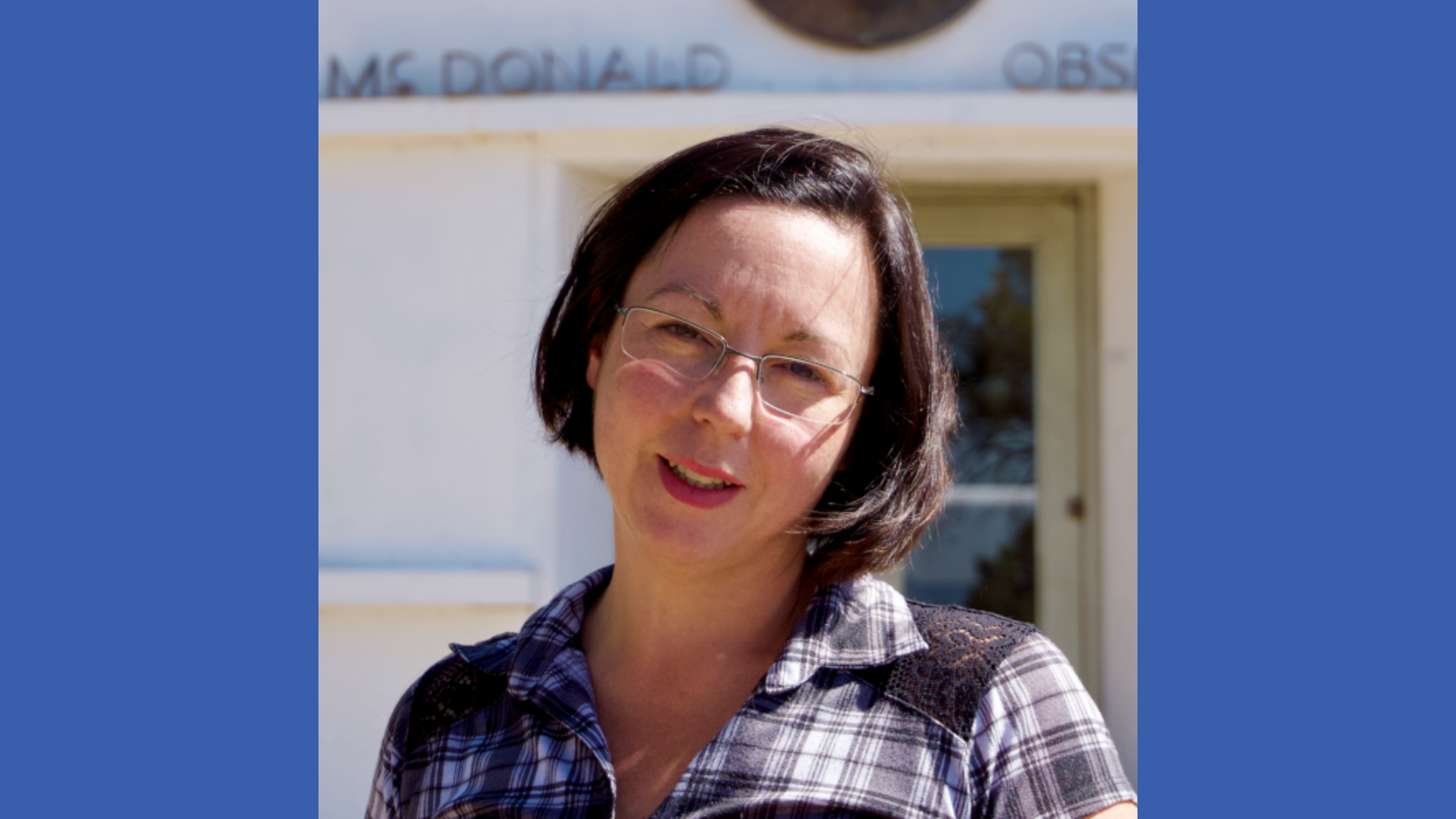
Dr. Teznie Pugh, McDonald Observatory, The University of Texas at Austin
Thursday, October 29, 2026
12:45-2:00pm – HR 136 (coffee hour beginning at 12:15pm)
Atronomy is under increasing external pressures: wildfires have forced evacuations and months-long shutdowns at major facilities, light pollution and satellite megaconstellations are eroding the dark skies that observatories depend on, and federal budget requests have proposed deep cuts to the National Science Foundation and the phase-out of flagship observatories. This talk looks at how the field is and could be responding. It argues that keeping observatories running now takes more than excellent science. Astronomers also need training in advocacy, communication, and policy, and they need research that documents the impacts facilities face. The talk then examines the coalitions that make this work: partnerships among observatories, with environmental, climatological, atmospheric and other scientists, with groups such as Audubon and The Nature Conservancy, and with elected officials. It closes with lessons we can learn from others: negotiating with satellite operators on the model used with oil and gas operations, treating light pollution as regulated pollution, and the wildfire mitigation observatories and others are already doing.
Dr. Teznie Pugh is Superintendent of McDonald Observatory at the University of Texas at Austin, where she oversees day-to-day facility operations, safety, infrastructure and site protections, and supports visiting and resident astronomers. Located on 650 acres in the Davis Mountains of west Texas, one of the darkest regions in the continental United States, McDonald houses more than a dozen research telescopes. Dr. Pugh has worked in observatory operations, across multiple observatories, since 2014 and has held senior leadership roles since 2018. From 2021 to 2025, she co-chaired the American Astronomical Society’s Committee for the Protection of Astronomy and the Space Environment (COMPASSE) with Dr. Aparna Venkatesan (USF Department of Physics and Astronomy). She holds a PhD in Astronomy from Western University in Canada; her research focuses on the use of high-resolution optical spectroscopy to study the physical properties and atmospheres of cool and evolved stars, and to discover and characterize exoplanets.