Thursday, November 5 12:45 PM - 2:00 PM
On-Campus Event - — Harney 136
"The explosive life of massive binary stars"
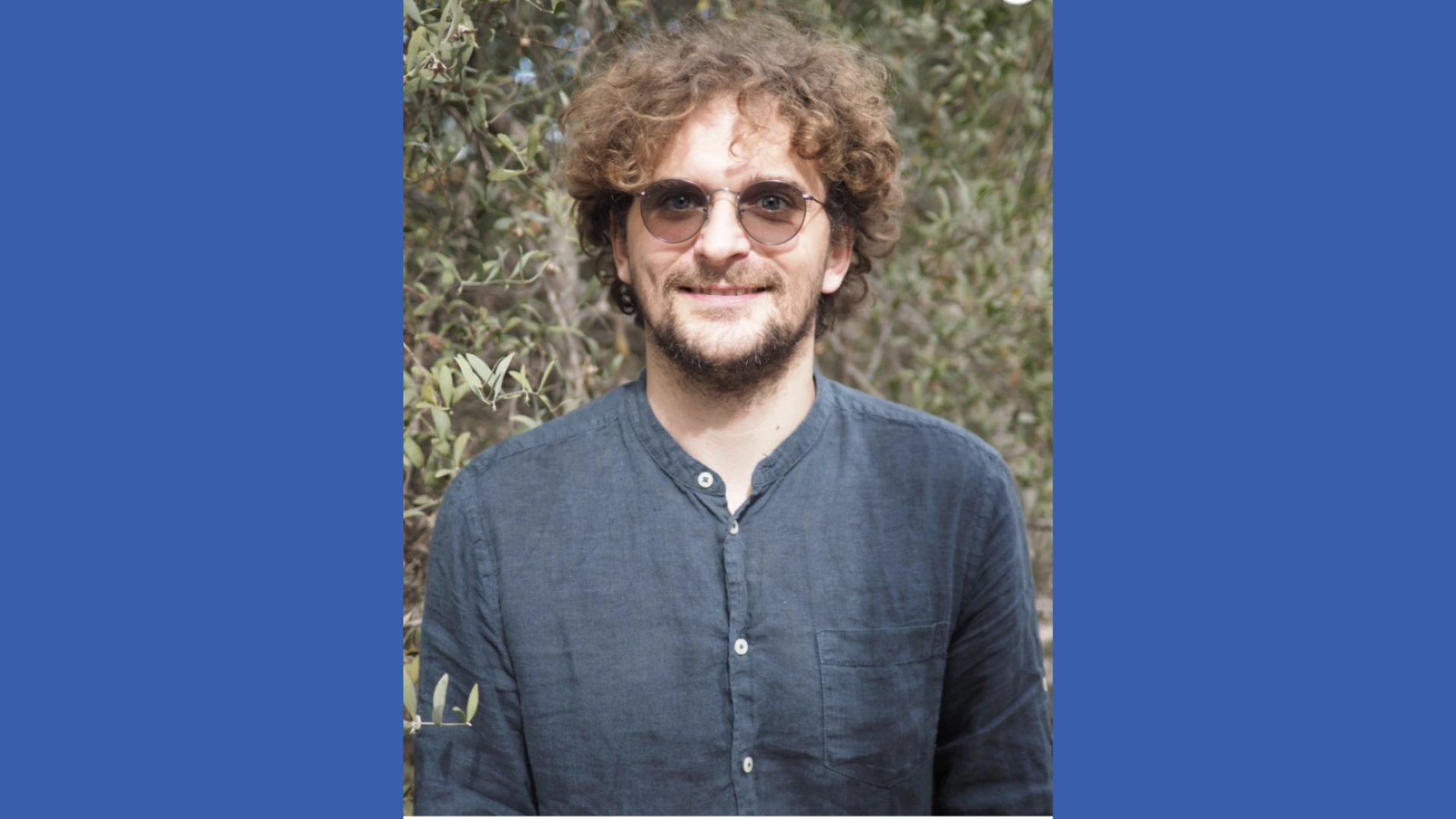
Dr. Mathieu Renzo, University of Arizona, Steward Observatory
Thursday, November 5, 2026
12:45-2:00pm – HR 136 (coffee hour beginning at 12:15pm)
Stars are evolving celestial objects: to support themselves they require to consume nuclear fuel in their core, which means that over time they run out of fuel and have to change. Typically, the change is
a contraction of the core, leading to an increase temperature until the next nuclear fuel can ignite (from H, to He, ... all the way to iron), unless electron degeneracy pressure can stop the contraction.
In this talk I will review stellar evolution, with primary focus on the evolution of "massive" stars, that go through all viable nuclear fuels and collapse at the end, possibly triggering a supernova explosion. These events mark the birth of neutron stars (NS) and/or black holes (BH), which we are now detecting through a variety of techniques (from high-energy astrophysics, astrometry, to spectroscopy, to gravitational-waves).
Our understanding of these birth event, the NS/BH they form, and thusour ability to interpret existing data-sets is limited by our understanding of the progenitor stars. This is further complicated by
the fact that the vast majority of these stars live in *interacting binary systems*, where the interaction can change the stars and their final fate, and vice versa, the supernova explosion can change the
binary architecture. I will show how observations in the local Universe can be used to understand the *binary* evolution of the progenitors and improve our understanding of the formation of neutron
stars and black holes.
Dr. Mathieu Renzo studied at the University of Pisa for my bachelor and master’s degrees. He then moved to Amsterdam for his PhD, to work with Selma de Mink. In 2017, he spent one semester as Kavli Institute for Theoretical Physics (KITP) graduate fellow at University of California, Santa Barbara and completed his PhD in 2019. After that, he moved to New York City where he spent four years between the Center for Computational Astrophysics of the Flatiron Institute and Columbia University, before moving to Steward Observatory at the University of Arizona.